|
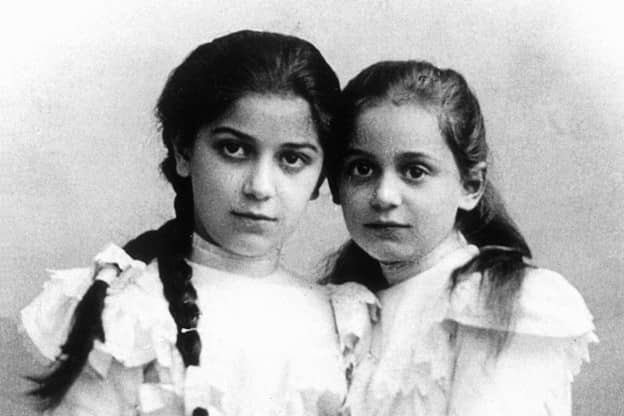
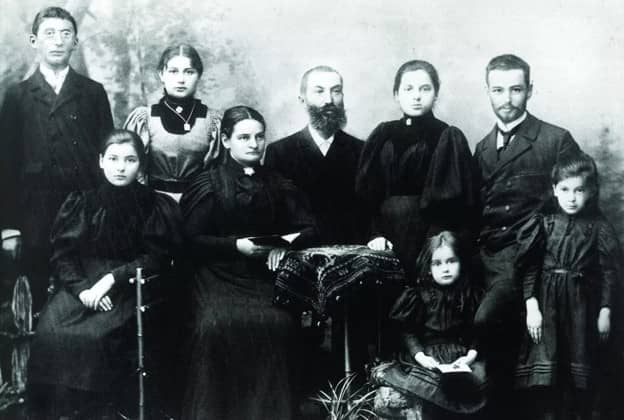
My Mother Remembers For the next year, My Secret is Mine newsletter will be centered on the autobiography of Dr. Edith Stein, Life in a Jewish Family. Canonized in 1998, she is now known by her Carmelite name of St. Teresa Benedicta of the Cross, co-patroness of Europe. Many apostolates today have St. Teresa as their patroness, including My Secret is Mine. This series will explore the Jewish roots of the Catholic faith found in the Old Testament and Magisterial teachings. All of our content will explore the themes of conversion, family relationships, and Jewish heritage in the life of Edith Stein. When Edith Stein decided to write Life in a Jewish Family in 1933, her mother was 84 years old. Edith states in her introduction: “What I shall write down on these pages is not meant to be an apologia for Judaism. To develop the “idea” of Judaism, and to defend it against false interpretation, to present the content of the Jewish religion, to write the history of the Jewish people—for all this, experts are at hand…I would like to give, simply, a straightforward account of my own experience of Jewish life as one testimony to be placed alongside others.”1 Her task, as she saw it, was to tell her mother’s story. Surviving family members found it painful to encounter some of the details she included about her siblings. There are missing folio sheets, indicating that perhaps Edith herself (or her sister Rosa) may have reconsidered what was appropriate to share. The details of family life can be messy, and many memories take on hues that can be deeply subjective. All we have is a snapshot of Edith’s perspective. Details of her father’s family are scant. A brief mention of her paternal grandmother related that the elder Frau Stein was headstrong and would not listen to others’ opinions. Yet, she was known to respect and even defer to the opinions of Edith’s mother. Apparently, that was a notable achievement. The key point of this first chapter is that Edith Stein was born into a long line of strong, faithful, and intelligent women. These include: Edith’s great-grandmother, Ernestine Burchard, had eleven children. Her husband, Joseph, was the cantor for the synagogue and had a prayer room in his home as well. The children of this family were used to hiring themselves out from an early age to augment their father’s poor salary. In their old age, the Burchards were extremely poor, and yet Edith testifies to their generosity to the poor, saving bits of coffee beans and other small items that were in short supply. Auguste Stein (Edith’s mother) called this grandmother, “a truly pious woman,” noting, “She prayed with the greatest concentration and intensity both at the synagogue and at the cemetery, and on Friday nights when she kindled the Sabbath lights while speaking the blessing. She was accustomed to close with the words, ‘Lord, send us only as much as we can bear.’”2 She outlived both her husband and her daughter, Adelheid Courant. Auguste Stein cared for her grandmother until she died in 1891, the year Edith was born. Edith’s grandmother, Adelheid Courant, had fifteen children with her husband Salomon. As a child, Edith and her siblings learned a sing-song melody to recall the names of their Courant aunts and uncles. Edith’s mother was the fourth child. They did ensure that their sons learned Hebrew, but not the daughters. The children went to Catholic and public schools, however their home was strictly observant in the Jewish faith. Merchants by trade, the Courants had a full partnership in both the home and the store. Adelheid served as the bookkeeper, earning the respect of all. Edith recalls, “When advice was needed on important matters, one went to my grandmother: not only her husband and children and brothers and sisters, but many friends as well. Ladies of the nobility often called on her, coming by carriage from their large estates in the vicinity, and they considered it an honor to have her for a friend.”3 The Courant family was well-known in Lublinitz (present day Lubliniec in Poland) for both hospitality and generosity to the poor. Auguste Stein’s children had wonderful memories of their visits and being pampered, especially by their grandfather. Also, Auguste’s four children who died were buried there. When Salomon Courant died, one son and two unmarried sisters took over the business and kept it running until the 1920s. Edith’s aunt, Mika Courant, never married. She preserved the Jewish faith in the family, and also worked for the family store. “By contrast, we looked up to Aunt Mika with respect. She filled the position in the family formerly held by Grandmother. She was the bookkeeper and Uncle’s advisor in all business affairs and was the confidante of all her brothers and sisters, whether older ones or younger, and later, also of her nephews and nieces. We have a picture of her as a young woman, showing her wonderful graciousness, her maidenly purity and her deep seriousness. She was the only one in the house who had preserved the faith of her parents and who saw to it that the traditions were carried out while the Jewish identity of the others had lost its religious foundation.”4 Edith’s older sister Rosa was sent to Lublinitz to learn to run a household under the capable hands of her Aunt Mika. She looked back on that year as one of the happiest in her life. Both Edith and Rosa Stein were strongly influenced by this faithful aunt. In 1921, Lublinitz held a plebiscite after World War I to determine if it would be part of Germany or Poland. Edith’s relatives voted for Germany, and left Lublinitz when the majority voted for Poland. Due to the stress of the situation, Aunt Mika had a terrible stroke. Eventually, Auguste took her in along with another sister, Clara, and cared for them until they died. Edith’s mother, Auguste Stein shines forth as a pinnacle of virtue in this notable family of fruitful and faithful women. She suffered many losses, notably four of her children dying before age three in Lublinitz prior to their move to Breslau. Business setbacks kept the family on the edge of poverty. Auguste was a competent gardener, which helped feed her growing family. The untimely death of her husband, Siegfried, utterly changed the landscape. Instead of heeding the advice of her relatives, Auguste kept his indebted lumber business and ran it herself. She took in boarders for additional income, and yet never flagged in her hospitality to all in need. There were often dozens of mouths to feed in her home, and yet she proved to be quite financially astute. In time, she was able to pay off all the debts, and the business supported her large family and its many grandchildren, cousins, and siblings until her death in 1936. Edith recounts: “My mother repeatedly followed her kind heart. Sometimes she even gave the “bad customers” some additional cash when they were in need. She was often cheated and the business was plagued with heavy losses. Despite that, it prospered. My mother always attributed this fact to being blessed by Heaven. Of course, that was correct but her natural talents had played a large role in her success.”5 In this chapter, Edith shares many memories that show her siblings in a critical light. She notes that her mother’s one fault was being a very difficult mother-in-law. In part, this may have been because she kept a kosher home in a time and place when many younger Jewish people were not as observant. It is impossible to know for sure how much of the strife was religious and how much was simple preference. It should be no surprise that Rosa and Edith inherited, in their own way, the religious seriousness of their aunt, mother, grandmother, and great-grandmother. The book Life in a Jewish Family highlights the fruitful lives of these virtuous women. Their households were founded on hard work and perseverance in the face of many challenges. Each member of the Stein household learned that they were loved. Discussion Questions: 1. Think of the women in your family. What traits and virtues shaped your personal strengths? Does your family have a particular charism? 2. Was there one or two people in the extended family who helped to strengthen your Catholic faith? What did they do? How did it affect your faith? 3. Sometimes converts are quick to discount the faith in their families of origin. Edith wrote this biography to explain what was good, true, and beautiful in her family of origin. What is good, true, and beautiful in your family? Endnotes:
|
My Mother Remembers

Related Newsletters
Edith and Erna: The Little Scholars
Summary of Ch 2 of Life in a Jewish Family by Edith Stein

Book Review: Tevye The Milkman’s Back Story
A book review in My Secret is Mine newsletter for Tevye the Dairyman by Sholem Aleichem, the backstory to Fiddler...(read more)

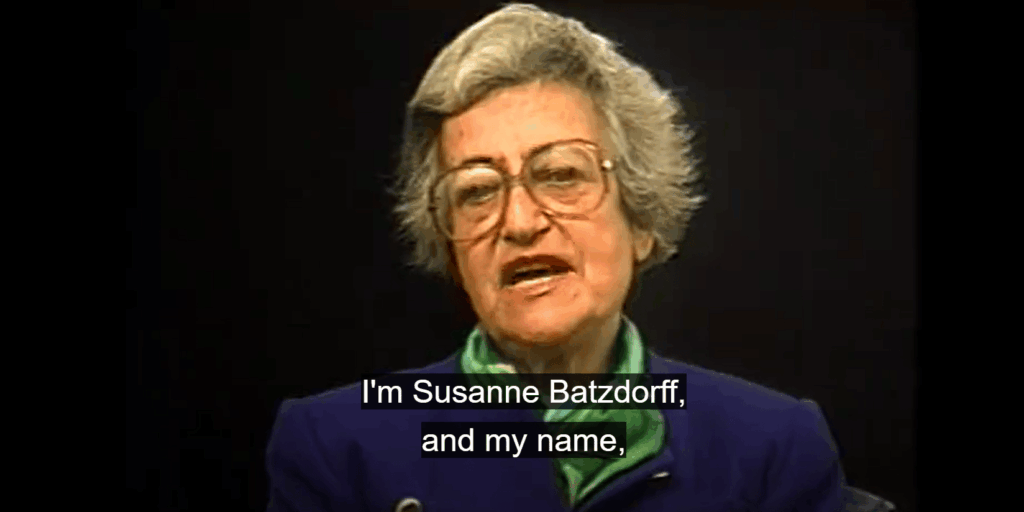
Meet Susanne Batzdorff, Edith’s Stein niece
A compilation of excerpts from interviews with Susanne Batzdorff, niece of Edith Stein (St. Teresa Benedicta of the Cross) in...(read more)