CLARE’S RULE OF LIFE APPROVED ON HER DEATHBED
by Kristen West McGuire
When Clare of Assisi abandoned her home for San Damiano, only Francis protected her. When the first Franciscans went begging, they also provided for Clare and her followers. Their reliance on divine providence included a deep devotion to Christ’s bodily discomforts.
All of us already imitate Him in this way; we hunger, thirst and tire. Thus, the genius of Francis and Clare was to embrace his humanity in the joyful trust that God would provide for their needs. The emphasis for them was divine providence. Their penitential renunciation shocked onlookers. But it was based on deep ties of love and mutual respect that could withstand hunger, thirst, fatigue and rejection.
Francis and his monks basically wandered the countryside and even travelled abroad, preaching and rummaging for their daily bread. Some Church authorities missed the inherent joy, seeing only bands of beggars with minimal Church oversight. Although Francis received oral permission for his order from Pope Innocent III in 1209, the Fourth Lateran Council forbade the establishment of any new religious orders in 1215.
When Cardinal Hugolino of Ostia was given responsibility for Clare and her nuns in 1218, he insisted that they take on a rule of life based on the Benedictine one. It was austere, but was not centered in the charism of poverty that Clare held dear.
Clare’s simplistic disavowal of all of the pleasures of this life even led Francis to correct her extreme penances. Yet, at the same time, she embodied his ideal of gospel poverty in all of its richness, providing Francis and his friars with spiritual support for their ideals. Each return to San Damiano from travel immersed them again in a community filled with an intense devotion to “Lady Poverty.” Clare and her nuns preached the gospel by living it.
Docile to the rule established by Hugolino, Clare was not deterred from her goal: a papal bull specifically permitting them to rely only on divine providence. Francis of Assisi died in 1226. His order remained in turmoil over the details of his exact teachings, particularly on the ownership of property. Against this backdrop, Clare steadfastly held to her ideals, unchanged in her daily life.
When Hugolino became pope in 1227, Clare’s hopes were realized. The next year, he sent her a papal ‘permission slip’ to practice poverty as a gospel precept. Clare’s order lived this rule until 1247, when Pope Innocent IV modified it. The practice of intense poverty was not supported by this Rule. Clare was horrified.
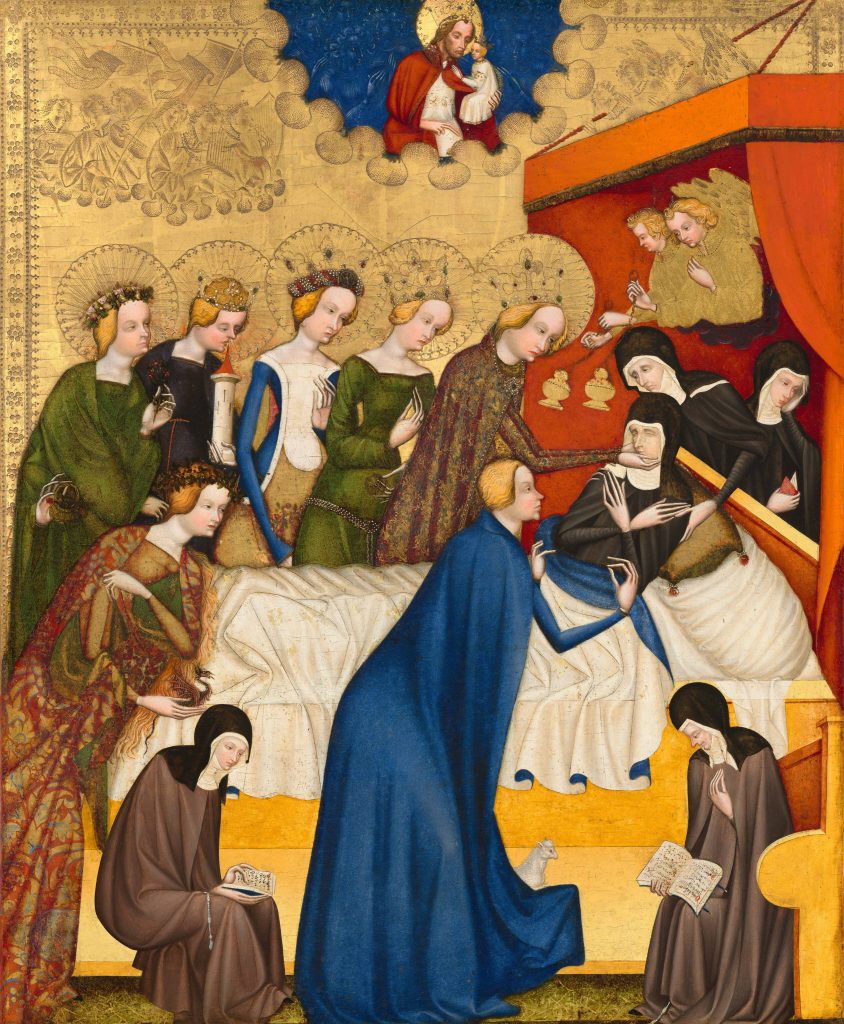
She began to write her own Rule, and it was submitted to the Vatican in 1252. It was the first rule of life for women written by a woman. Only two days before her death the following year, Clare finally received word that her Rule was approved. According to witnesses, she kissed it many times before dying on August 11, 1253.